Lorraine (Rainey) Cobcroft
AUTHOR
Writers are often urged to write what they know. Build on personal experiences. Be inspired by interesting characters they have met.
I suspect the seeds of my stories lie dormant in my memory. Something I read, a random comment, a tale a friend tells, or a some odd behaviour I witness triggers a memory. The memory slowly evolves to a chrysalis - a sketch that calls to be expanded to a story that begs to be told.
The chrysalis triggers a dream, and in the dream I see, vividly, the story as I will write it. It does not unfold as a vision. Rather, I see the words written on a page and I must find pen and paper and write what I saw quickly, before the words fade away. Then, once I have written, I get to know the characters from my dream - invented folk, not real. They come to life in my mind and they follow me about and talk to me. They confess their most awful sins. They tell me every intricate detail of their life, thoughts, feelings, hopes, and dreams. They beg me to make their story known in ways that ‘’nudge the world a little’ - to tell of their pain and suffering and the wrongs done to them, and of their victories and their triumphs and their hopes for a better tomorrow.
My stories are not mine, you see. They belong to the people who populate my dreams, but they come to life when I awaken and they light a fire in me, and I honour those imaginary folk by telling their story as they told it to me.
Perhaps I am mad. Are sane people followed about by imaginary people who tell all and beg for all to be recorded? Or perhaps I am a fraud, for the stories I write are not mine. I do not compose them. I see them. I hear them. Then I record them. But except for the dialog, I record them in my words. I add colour and I add shape. I choose the order of events and the which character’s perspective to present. I choose where to put emphasis and what secrets I should not tell.
No story is original. Every tale that can be told has been. It’s how it’s told that matters. My stories belong to others, but it is I who decide, ultimately, how to tell them.

To Plot or to Panster: Story Boards and Scene Planners
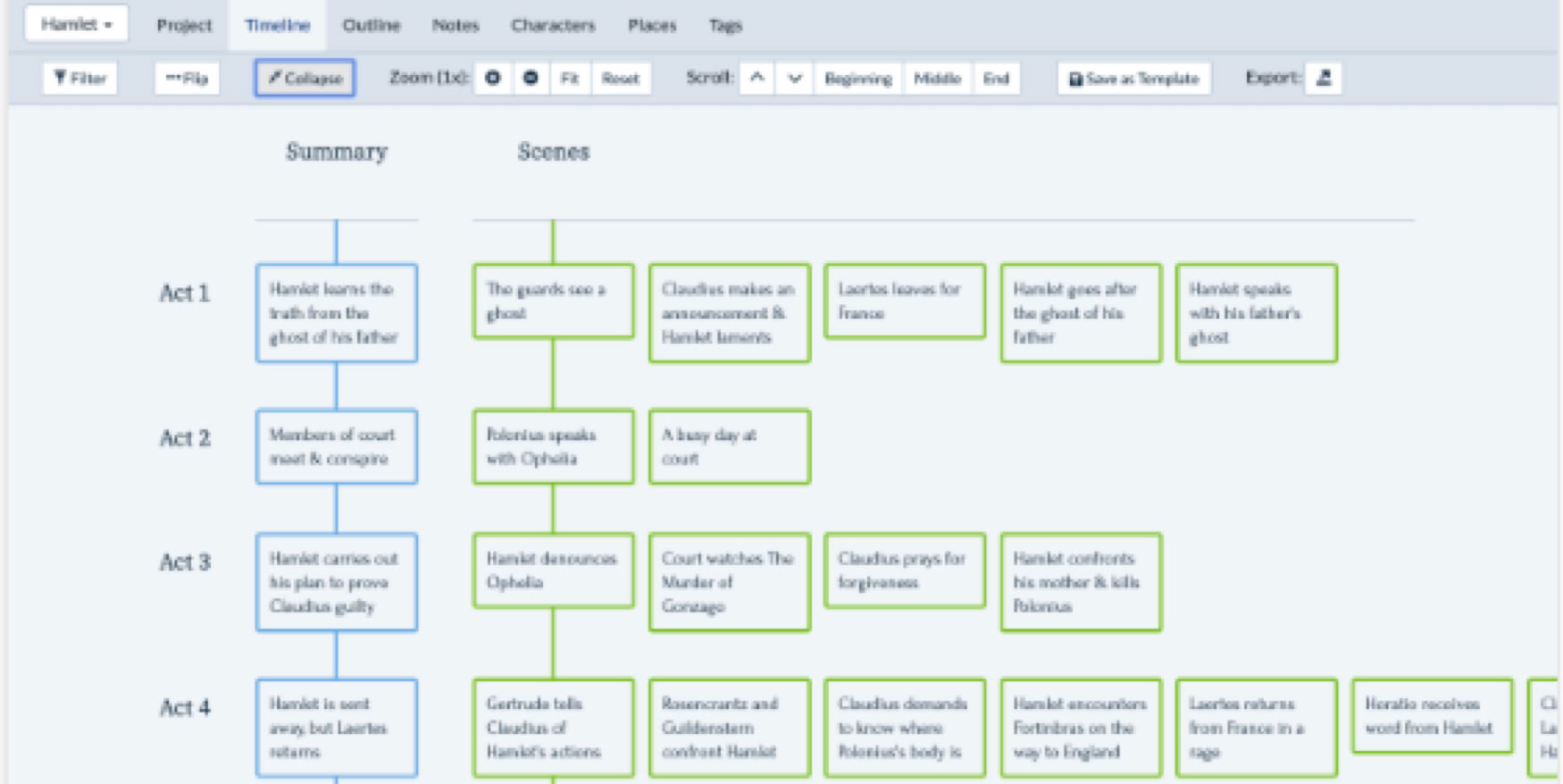
A fellow writer once challenged me to a race to produce a publishable novel. I did not engage, but the premise he put before me set me thinking. He said one cannot write without first making a detailed outline of the story, placing every event in sequence, detailing every scene, and noting the thoughts and actions of each character at each point in the story. He did that in a spreadsheet. Some do it with plotting software. Some make mind maps. Some use diagrammatical story boards. Some use index cards of sticky notes that they arrange on a board.
Not me! I dispute that author’s claim, because pansters exist and I am not alone in letting the story unfold organically, with little to no idea at the start or even half way through what might happen next or how the ending will unfold. I know the message I want the story to convey. I know the feeling I want the story to evoke. I let the characters tell me what should happen next and how it will transpire. It’s their story, so I let them tell it.
Do plotters make better stories? I think not. After all, Stephen King is a paster!
Aside for plotters and punsters, there are writers whose focus on plots (Yes, pansters even often still make the key cents of the story their focus). Then there are writers whose focus is character - reporting their internal struggles and how they respond to events. Character-based stories are more introspective - focused less on what happened and more on how it impacted the people involved.
I write character-driven stories, because I am fascinated by people. The details of events interest me far less than the emotions and reactions of the people those events impact. I am less concerned, for example, with the exact cause, height and timing of a flood and more with how the family whose home was inundated coped with the challenge of cleaning up and rebuilding and the varying emotional responses of each member of the family and of the neighbours and friends who witnessed the event or came to the family’s aid.
To write character-driven stories, one must know their imaginary characters intimately - their looks, their personality, their history, their family, their friends, their likes and dislikes, their strengths and weaknesses, their thoughts, hopes, dreams and wishes. Does guilt plague them, or do they shrug off their mistakes with little care?
I used to use a software tool called Character Pro to define hundreds of characteristics of each character. Sadly, it is defunct, so now I use a template of over 1000 questions, and I carry out a psychological analysis using tools like the Myers-Briggs Type Indicator or the Type Dynamics Indicator.
For me, this is the fun part of writing. I love examining people’s character, motives and emotions. Perhaps I should have studied psychology. I find the subject endlessly fascinating. I psychoanalyse my characters until I am confident I know them as intricately as I know myself. Only then can I confidently write their story.

First it was the typewriter. Just imagine writing a whole novel in long hand. Then came the word processor. Wow! Now rewriting was a dream. (Read my blog posts about my typewriter and word processor adventures.) I wrote short stories on a manual typewriter, but I can’t even imagine writing an entire novel without a word processor.
With the advent of computers, we have welcomed character profiling tools, plotting tools, spell checks, editing tools, and now even manuscript assessment software.
With AI now is delivering tools that allegedly can write an entire novel. Sorry, I have no faith. Somehow I can’t see myself ever reading something written by a machine. After all, AI can only mimic what has been written before. It has no capacity for original thought.
For a long time, Write It Now was my tool of choice for writing. It’s a word processor of sorts, but designed specifically for writers. It has a lot of cool features that make it easy to record and cross- reference character descriptions, timing of events, tensions peaks and troubhs etc. It also automatically saves every edited draft and lets you go back to previous drafts if an idea to change something didn’t work out. Sadly, the developer has stopped supporting it. There is a more popular competitor (Scrivener), but it’s not nearly as good. Market success doesn’t necessary evidence superior quality.
I also used to use Character Pro to develop my characters, but it is also now defunct, so I do that in a spreadsheet now. Not nearly as convenient!
I tried Plotter for plotting, but I’m a Panster, so a plotting tool that follows convention doesn’t work for me. I have tried, a few times, to work my stories into one or more of the recommended structures, but I simply can’t. My characters do what they do. They don’t care for the rules!
I am now using Autocrit extensively, not for writing - but rather for editing and for making ebooks. It is brilliant for spotting the kind of errors spell and grammar checkers don’t find - repetition, excess use of dialog tags, excess use of adjverbs, etc. It also summarises each chapter in ways that let you see quiclky if there are plot holes. It performs fairly in making a book into an ebook - though not so much in preparing for publication, which I do with Affinity Publisher these days, since Adobe has become unaffordable. And it does some cool stuff to help with marketing too. Sometimes the blurbs it composes amuse me. Like everything AI, it makes heaps of silly errors. But used selectively, its tools can be useful.
One tool I do not ever use is Microsoft Word. It wasn’t made for authors, and I hate everythihng Microsoft because their success was not built on delivering quality, but rather on bullying market tactics. Microsoft has destroyed some of the best software ever created and lowered the software quality bar. For word processing, when I have to create an MS Word file, I use Textmaker by SojftMaker. Their office suite is brilliant and cheap.
I you go looking for tools for writers, you’ll find hundreds, at every price point. As with all software, there is the good, the bad, the mediocre, and the downright ugly. I find the most have some good features but lack a lot. Pity we can’t combine the best of each! But the computer Aage has certainly made writing easy - for good writers and for terrible ones. Anyone can publish now. And that’s both goodd and bad.
Happy reading!

I have three projects on my desk at present:
1. Something different: back to the kind of writing I did for a living. My husband has a passion for horse-racing. Never a gambler, he nevertheless studies form and devises methods of picking winners. With his help, I am writing “The Ride to Success - a ‘bible’ for anyone interested in betting on horse races (or football, dogs, etc. if you prefer!)
2. A collection of my short stories. I wrote them. Why let them gather dust?
3. A memoir about a traumatic period of my life, in my late teens, and the path to recovery and understanding.
Anyone care to suggest cover ideas for any of these works?